
Is Tanzania safe? It’s one of the most frequently asked questions by those thinking of planning a trip to East Africa, especially when the itinerary includes a safari, the Serengeti, the Ngorongoro Crater or a few days by the sea in Zanzibar.
The answer isn’t simply yes or no. Tanzania is a very popular destination amongst travellers and, as is the case in many countries, it is important to be aware of a few simple precautions to ensure you can enjoy your trip with greater peace of mind.
For those who choose to go on a safari in Tanzania, much of the experience takes place within national parks and tourist areas, with expert guides and local operators who know the area and the rules to be followed.
In this article, we look at the main risks in Tanzania, how to behave in the cities, what you need to know about Zanzibar, and what precautions can help you plan your trip with care.
Important note: safety conditions may change. Before setting off, it is always advisable to consult the official guidance issued by your own country and check for any updates regarding your destination.
Is Tanzania safe for tourists?
Tanzania is a well-known tourist destination and every year welcomes travellers who are particularly interested in safaris, nature, trekking and the seaside.
This does not mean that you should ignore the usual risks associated with travelling. As with many destinations, it is important to be aware of crime, road conditions and any situations of tension or unrest that may arise in certain parts of the country.
For a tourist, therefore, the most useful question is not simply ‘Is Tanzania dangerous?’, but rather:
“What are the risks and how can I minimise them whilst travelling?”
By following a few simple rules, using reputable service providers and taking particular care when travelling and in urban areas, you can plan your trip with confidence.
What are the main risks in Tanzania?
Crime is something to bear in mind, particularly in large cities and busy areas. For those travelling on an organised tour, it is sufficient to take a few standard precautions: avoid displaying valuables, be vigilant in crowded areas and use reliable transport. It is also important to distinguish between different travel experiences.
It’s one thing to get about on your own in a big city; it’s quite another to take part in an organised safari in Tanzania with a local guide and pre-arranged transport.
Tanzania and crime: is there cause for concern?
Crime does exist and must not be underestimated, particularly in urban areas and in busy places.
The official recommendations advise, for example, that you should be on your guard against pickpocketing, theft and robbery, and avoid displaying money, jewellery or valuables unnecessarily.
The simplest precautions are also the most effective:
• avoid walking alone in isolated areas, especially after sunset
• do not leave bags or mobile phones unattended
• use taxis or organised transfers when necessary
• keep your passport and important documents in a safe place
• do not carry large amounts of cash with you
• take care in markets, at stations and in very crowded places
For those travelling with a local tour operator, it is also a good idea to follow the guide’s instructions, as they are familiar with the area and know the best ways to get around.
Is Zanzibar dangerous?
Is Zanzibar dangerous? This is another very common question.
Zanzibar is one of Tanzania’s best-known tourist destinations and is often combined with a safari in the north of the country.
The usual safety precautions also apply on the island: avoid isolated areas, do not leave personal belongings unattended, and take care when moving around.
It is also important to bear in mind that Zanzibar has its own distinct cultural characteristics. In particular, away from the seaside resorts and tourist facilities, it is advisable to respect local customs, including those relating to dress and behaviour.
This does not mean giving up the freedom to travel, but simply adapting to the local context.
If you’re thinking of combining a safari with a beach holiday, you can explore our travel packages in Tanzania featuring safaris and Zanzibar and find the itinerary that best suits your trip.
Is it safe to go on a safari in Tanzania?
For many travellers, this is one of their main concerns before setting off.
Safety depends above all on how the experience is organised. Within parks and protected areas, strict rules are followed, and excursions are carried out using specially equipped vehicles and professional guides who are familiar with the terrain and the behaviour of the animals.
Safety therefore depends largely on following the rules and the driver’s instructions.
When on a safari, it is essential to:
• remain inside the vehicle when asked to do so
• do not approach the animals on your own
• do not feed wild animals
• always follow the guide’s instructions
• avoid making noise or behaving in a way that might disturb the animals
• do not get out of the vehicle in unauthorised areas
Tanzania is famous for parks such as the Serengeti, Ngorongoro and Tarangire, where respect for the environment and the park rules is a fundamental part of the experience.
You can find out about the main itineraries and the various travel options in our guide to safaris in Tanzania.
Is driving in Tanzania dangerous?
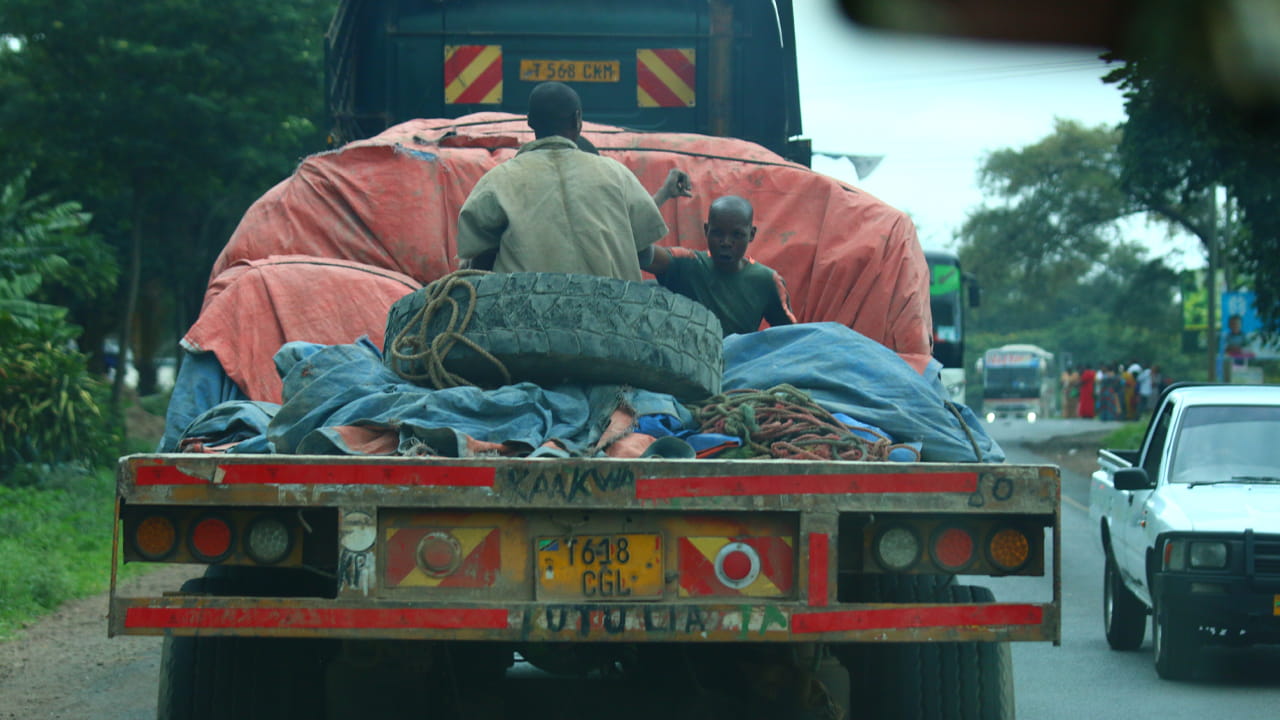
One of the aspects that requires the greatest attention is road safety.
Road conditions, lighting, traffic and driving style may require greater attention whilst travelling than we are normally used to.
For this reason, when travelling for leisure, it is generally best to use a driver or a local guide who knows the roads and distances well.
This is particularly true when travelling across the country or visiting national parks, where journeys can be long.
An organised trip also allows you to plan your timetable, journeys and stops more effectively, avoiding the need to improvise routes in unfamiliar areas.
Tanzania and terrorism: is there a risk?
The risk of terrorism is one of the factors to bear in mind when planning an international trip.
The authorities in several countries have reported a possible risk of terrorist attacks in Tanzania and recommend particular caution in certain parts of the country. The level of alert may therefore vary depending on the area visited and the current situation.
For this reason, it is important to always check official information before setting off and whilst travelling, especially if you plan to visit less touristy areas or travel independently.
It is important not to generalise: security conditions are not necessarily the same across all areas of Tanzania.
Is Tanzania safe for solo travellers?
Travelling on your own generally requires a bit more care than an organised or group trip.
If you choose to travel independently, it is advisable to:
• plan your journeys in advance
• use reliable accommodation providers
• avoid travelling alone in remote areas
• share your itinerary with family or friends
• use reliable transfer services
• always keep a copy of your documents
• exercise a degree of caution when going out in the evening
For those wishing to go on a safari, one option is to organise the trip with a local tour operator, whilst still retaining the option to tailor the itinerary and activities to your preferences.
Is Tanzania safe for women?
Many women travel to Tanzania, but even in this case it is important to take some standard precautions.
In particular, it is advisable to avoid walking alone in isolated or deserted areas, especially after sunset, and to choose transport and accommodation carefully.
In Zanzibar, it is also advisable to take local cultural traditions into account and dress more respectfully away from the beaches and tourist resorts.
Caution should not be seen as a hindrance to travel, but as part of the necessary preparation when visiting a country with a different culture, infrastructure and customs.
What are the health risks in Tanzania?
Before travelling to Tanzania, it is important to find out about health matters as well.
Requirements may vary depending on the duration of the trip, the areas visited, the season and the traveller’s personal circumstances.
It is therefore advisable to speak to your doctor or a travel medicine centre before you set off and check the latest health advice.
It is also important to have adequate travel insurance, particularly as a safari may take you to areas far from major urban centres.
For practical information on preparing for your trip, please see our guide on how to organise a safari in Tanzania and Zanzibar.
10 tips for travelling safely in Tanzania
Here are a few simple tips to help make your journey more relaxing.
• Choose reputable tour operators and guides, particularly for safaris and transfers
• Avoid displaying valuables in crowded places
• Do not walk alone in isolated areas, especially at night
• Use organised transport when you are unfamiliar with the area
• Always follow the guide’s instructions during the safari
• Do not approach wild animals and do not get out of your vehicle where it is not permitted
• Respect local traditions, especially in Zanzibar
• Keep your passport and important documents safe
• Check your health and insurance arrangements before you set off
• Check the official safety information shortly before your journey
So, is Tanzania dangerous?
Tanzania is not a risk-free destination, but it is incorrect to describe the whole country in general terms as ‘dangerous’.
There are risks associated with crime, road traffic, the local situation and, in some areas, terrorism. International authorities therefore recommend that you find out more before you travel and take the necessary precautions.
For a holiday, however, it is also important to consider how the experience is organised.
A safari led by an expert guide, with organised transfers and carefully selected accommodation, is very different from travelling independently without knowing the area.
Safety, therefore, also depends on the quality of the organisation.
Travelling in Tanzania: is an organised tour the best option?
If this is your first time visiting East Africa, using a local tour operator can make many aspects of your trip much easier.
This is particularly important for an itinerary that combines safaris, national parks, Zanzibar and perhaps Mount Kilimanjaro, as the distances involved are considerable and each area has its own distinct characteristics.
Tracks of Africa organises bespoke safaris in Tanzania, with itineraries focusing on the main national parks and the option to combine the safari with a stay in Zanzibar.
You can start exploring your travel options with our guide to what to see in Tanzania.
Ready to discover Tanzania?
It is perfectly normal to have some concerns about safety before setting off. Being aware of the potential risks, finding out about the latest conditions and choosing a reliable organisation are the first steps in preparing for your trip.
If you’re thinking of going on a safari in Tanzania, you can choose from a range of itineraries covering the Serengeti, Ngorongoro, Tarangire and other parks, perhaps adding a few days’ relaxation in Zanzibar.
Discover what Tracks of Africa has to offer and get in touch with us to put together a tailor-made itinerary in Tanzania to suit your needs.
Please note: safety conditions, entry requirements and health guidelines are subject to change. Always check the latest official information before you travel.