
Lake Victoria is much more than just a body of water: it is a liquid world teeming with life, cultures and ancient histories. When one asks where Lake Victoria is, the answer is not merely geographical, but also cultural and ecological: this vast basin links three East African countries and sustains millions of people through its fisheries, transport and ecosystems.
With a surface area larger than that of many European countries, the lake offers seascape-like horizons, dazzling sunsets and a rich tapestry of unique lakeside traditions. For travellers visiting Tanzania, the lake is the perfect complement to a safari through the savannahs and craters: here, Africa reveals itself in its aquatic, rural and deeply human form.
Planning a visit means immersing yourself in a landscape that is at once natural, economic and spiritual – off the beaten track, yet central to truly understanding the region’s identity.
Where is Lake Victoria?
Lake Victoria lies in the heart of East Africa, shared between Tanzania, Kenya and Uganda, with the largest part situated on the Tanzanian side. Its approximate coordinates range from 0°30’N to 3°00’S in latitude and from 31°39′ to 34°53’E in longitude, at an average altitude of approximately 1,134 metres above sea level.
With a surface area of over 68,000 square kilometres, it is the largest tropical lake on the planet and the largest in Africa; indeed, in many places the horizon appears curved, much like that of an ocean. Its jagged shores alternate between rocky peninsulas, sandy beaches, marshy areas and rapidly developing urban centres.
From a hydrological point of view, the lake is fed by numerous rivers, including the Kagera, and is the main source of the White Nile. This connection to the great river makes it a crucial component of the entire water system of north-eastern Africa.
The waters are relatively shallow – averaging 40 metres – but teeming with biodiversity. Historically, local communities have developed fishing, trading and navigation techniques adapted to these conditions, creating a lakeside culture distinct from that of the surrounding savannahs.
Anyone wishing to organise a trip to Tanzania with a tour operator will find Lake Victoria a fascinating addition to the major national parks.
How to get to Lake Victoria from Tanzania
The main gateway to the Tanzanian side of the lake is Mwanza, a bustling port city and commercial hub. From the main tourist destinations in the north, such as Arusha or Kilimanjaro, you can fly there in about an hour and a half on regular domestic flights.
Arusha and Kilimanjaro airports offer several daily departures, making it easy to reach the lake even for those with limited time.
By road, the journey from Arusha to Mwanza takes in spectacular scenery of highlands, rural villages and stretches of savannah, but takes between 8 and 10 hours’ driving, depending on road conditions.
Many travellers choose to combine this journey with stop-offs at the northern parks, making the journey itself part of the experience. Costs vary considerably depending on the mode of transport and level of comfort, but remain generally affordable compared with other African destinations.
Another option is to reach the lake from the western Serengeti, specifically from the Grumeti and Ikoma areas, via road transfers or short charter flights. This option is ideal for those who wish to include the lake as part of a wider, pre-planned nature tour.
Careful planning of timings and connections allows you to experience Lake Victoria at a leisurely pace and, above all, to incorporate it seamlessly and coherently into one of the best safaris in Tanzania.
What to see at Lake Victoria: main attractions
The urban heart of the lake is Mwanza, overlooking a bay dotted with gigantic granite boulders known as the ‘Bismarck Rocks’. The city is a blend of African modernity and local traditions: bustling markets, traditional shipyards, fishermen returning at dawn and sunsets that set the sky ablaze.
The Kirumba fish market is an intense sensory experience, where you can observe the entire fishing cycle, from the sale of the catch to the drying of the fish on the beaches.
A short distance from the coast lie the Ukerewe Islands, a lush archipelago with few tourists, ideal for those seeking peace and quiet, walks through rural villages and endless lake views. Here, time seems to pass more slowly, amidst cultivated fields, rowing boats and children who wave curiously at visitors.
Further west lies Rubondo Island, a true natural gem that combines a lake environment with tropical forest. Its sheltered bays are home to hippos and crocodiles, whilst the island’s interior is inhabited by reintroduced chimpanzees, giraffes and an extraordinary variety of birdlife.
Including a stop at Rubondo Island National Park adds a wild and little-known dimension to the lake journey.
Flora and fauna of Lake Victoria
The lake’s ecosystem is a complex mosaic of open water, reed beds, marshes and riparian forests. Historically, it was famous for its extraordinary diversity of endemic cichlids, many of which have sadly disappeared following the introduction of the Nile perch, which now dominates commercial fishing.
Alongside this predator, tilapia, catfish and other native species still live here, and they are vital to the ecological balance.
Along the banks, it is easy to spot hippos emerging at dusk and Nile crocodiles lying in wait for prey in the shallows. The marshy areas attract a myriad of waterbirds: herons, pelicans, kingfishers, jacanas and African fish eagles.
During the rainy season, the vegetation flourishes and the riverbanks become a birdwatcher’s paradise.
On the islands, particularly on Rubondo, the landscape takes on an almost jungle-like appearance, with tall trees, vines and an undergrowth teeming with life. Here, the interplay between lake and land fauna creates unique scenes, a far cry from the classic images of the savannah.
Many travellers choose to combine this experience with a visit to the Serengeti National Park to appreciate the full range of Tanzania’s biodiversity.
Things to do and excursions at Lake Victoria
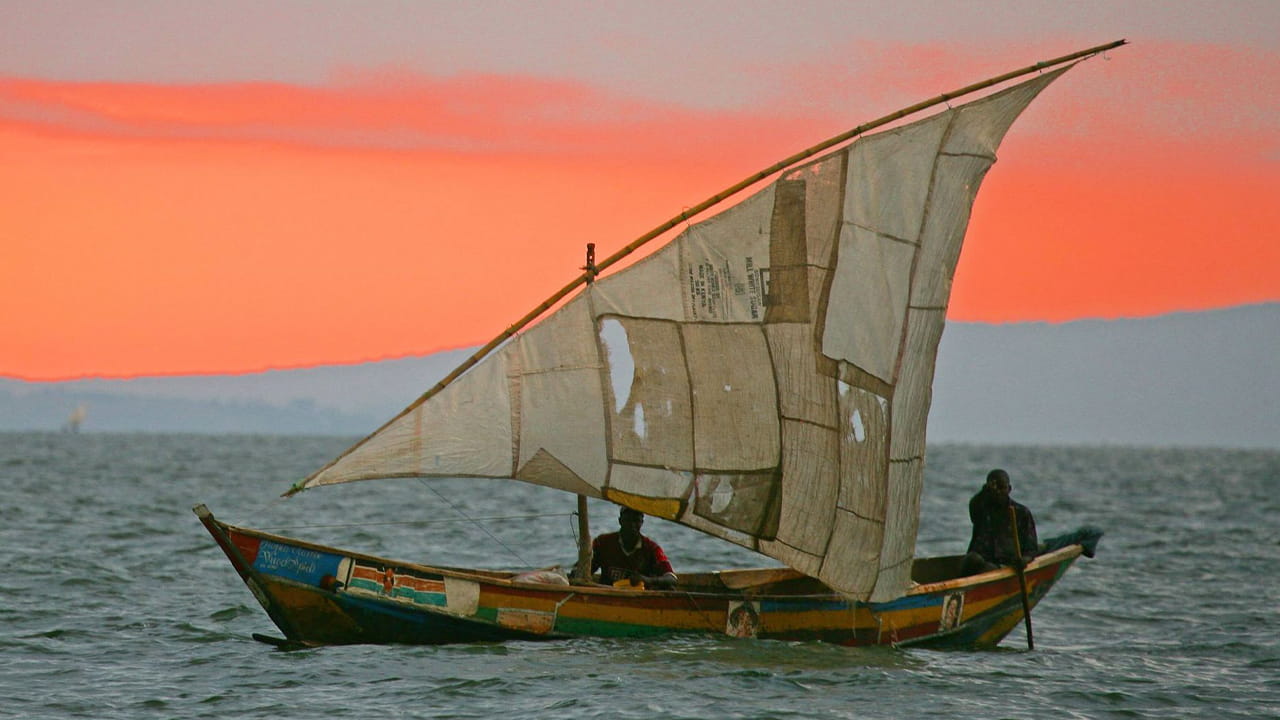
Sailing at sunset is one of the most evocative experiences the lake has to offer: small wooden boats glide across the golden water whilst the sky turns shades of orange and purple. Boat trips allow you to get up close to the islands, watch the birds and meet local fishermen who proudly demonstrate their traditional techniques.
Sport fishing is very popular, particularly for Nile perch, which can grow to a considerable size. Many lodges organise guided trips with professional equipment, suitable for both beginners and experienced anglers.
At the same time, visiting the fishing villages offers an authentic glimpse into everyday life, away from the most popular tourist routes.
On the larger islands, you can go on short hikes through green hills, plantations and scenic trails. On Rubondo, however, activities include boat safaris amongst the hippos, guided walks in the forest and chimpanzee spotting.
From here, a short flight or transfer takes you to the Serengeti plains, creating a fascinating contrast between water and savannah.
When to visit Lake Victoria
The best time to visit generally coincides with the dry season, from June to October and, to some extent, between December and February. During these months, the waters are calmer, the roads are more passable and outdoor activities are more enjoyable. Temperatures remain mild thanks to the altitude, with warm days and cool evenings.
During the rainy season, from March to May and, to some extent, in November, the landscape turns a stunning shade of green and the birdlife is at its best, but some journeys may be more challenging. Those travelling during these months should allow for more flexible timings and choose well-equipped accommodation.
Including the lake in a safari itinerary requires a little seasonal planning: for example, visiting the lake either before or after the Serengeti allows you to experience a variety of environments and rhythms. For those wishing to time their trip to coincide with the most spectacular natural events, it is worth considering the Great Migration in Tanzania, planning your visit to the lake at times that complement the movements of the herds.
Lake Victoria and safaris: how to plan your itinerary
A classic itinerary might start in Arusha, pass through the Ngorongoro Crater and the Serengeti, and then head west to Mwanza and the lake. This sequence allows you to experience Africa’s iconic wildlife first, followed by the lake’s more cultural and contemplative atmosphere.
Another option is to include Rubondo as a final or stopover destination: here you can enjoy a unique water safari before heading back to the great savannahs. In this way, the lake is not just an ‘extra’, but an integral part of the journey.
Those with more time on their hands can also venture as far as Lake Eyasi and the Hadzabe tribes, creating an itinerary that combines nature, culture and encounters with local people.
To plan a well-balanced itinerary, it is worth considering Tanzania’s national parks as a whole and the travel times between them. Lake Victoria works particularly well as a transition between the western areas and the northern circuit, offering a change of pace that enriches the overall experience.
Including Lake Victoria in a grand African tour
Understanding where Lake Victoria is located also means understanding how this body of water fits into the geography of East Africa. It is not merely a natural destination, but a crossroads of histories, economies and cultures that interact with the great national parks and surrounding savannahs.
Many travellers choose to combine a visit to the lake with a Big Five safari in the Serengeti or Ngorongoro, thus enjoying the contrast between iconic wildlife and aquatic landscapes. Others prefer to explore the lake first and then head east to Zanzibar, rounding off their trip with a visit to the Indian Ocean.
In any case, Lake Victoria adds depth and authenticity to the itinerary. It is not merely a photo stop, but a place that invites you to slow down, observe and listen. Planning the right time to include it in your itinerary – taking into account the when to go to Tanzania for a safari – allows you to make the most of what it has to offer, making the trip truly complete.