
A safari with a difference
A Tanzania safari in January and February can offer a truly unique experience: not only can you observe the savannah wildlife, but you can also witness one of the most delicate moments in the animals’ natural cycle.
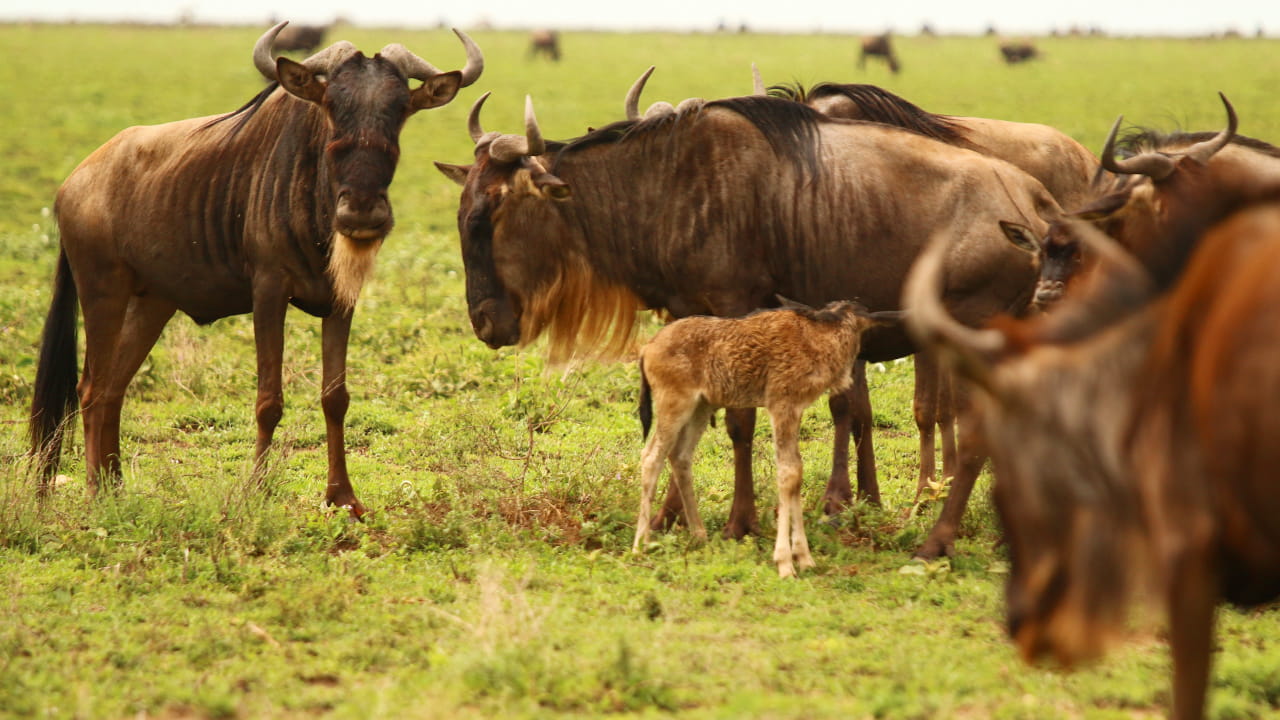
In the Ndutu area, in the southern part of the Serengeti ecosystem, large herds of wildebeest gather during the calving season. The landscape changes, the plains become teeming with calves, and predator activity becomes particularly intense.
It’s a different way of experiencing a safari: less focused on searching for a single animal and more on observing the entire ecosystem.
What does it mean to experience the calving season?
The calving season is one of the most fascinating times to go on a safari in Ndutu.
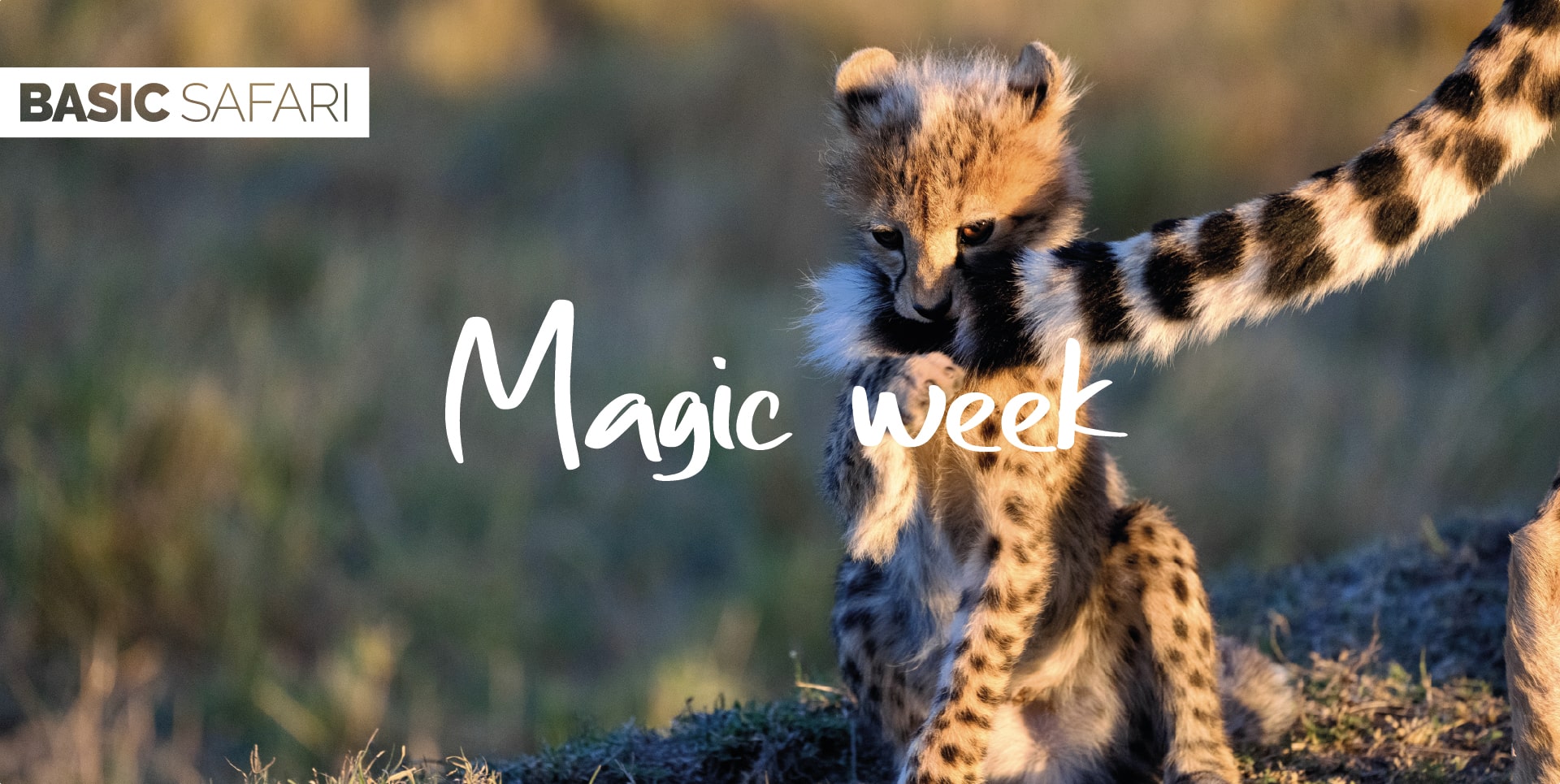
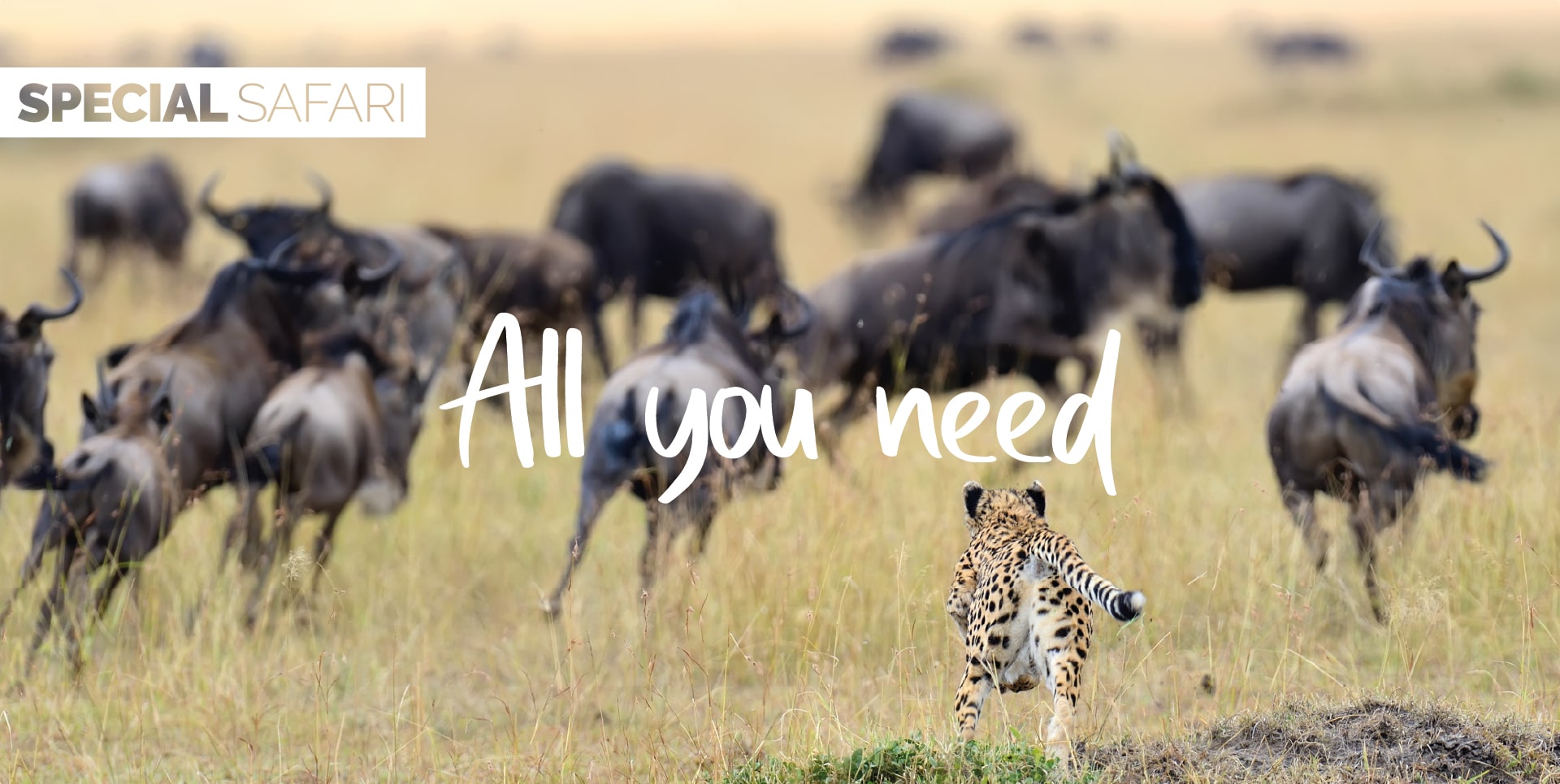
The cubs, still inexperienced, must quickly learn to follow their mother and move with the herd. Around them, a complex web of relationships develops between herbivores and predators. Lions, cheetahs, hyenas and other carnivores may be present in the area precisely because of the abundance of prey.
This does not mean that every game drive offers the chance to witness a birth or a hunt. Wildlife does not follow a schedule, and every day can be different. And it is precisely this unpredictability that makes the experience so authentic.
Why Ndutu is special in January and February
In January and February, the southern plains offer particularly favourable conditions for large herds of wildebeest.
The area offers vast open spaces and pastures that encourage the presence of herbivores. For those wishing to photograph the young or observe the behaviour of the herds, this environment often provides good visibility.
The landscape is also very different from what one normally associates with the Serengeti during the dry season: the rains help to make the plains green and teeming with life.
A day on safari in Ndutu
The day usually begins early, when the light is still soft and the animals are particularly active.
Game drives may focus on areas where herds have been spotted, or follow the guides’ advice regarding the presence of predators. During the day, you may well spend a lot of time simply watching a group of wildebeest and their calves.
It doesn’t have to be anything spectacular for the moment to be interesting: watching a mother with her calf, following the movements of the herd, or seeing how the animals react to the presence of a predator is all part of the experience.
How much time should you set aside for the baby boom season?
If seeing the newborn cubs is one of the main aims of your trip, it is best not to cram the whole experience into a single day. Spending more time in Ndutu allows you to explore different areas and tailor your game drives to the animals’ whereabouts.
This approach is particularly well-suited to nature photography, but also to those who wish to experience a safari without having to travel constantly from one park to another.
The location of the herds can, in fact, vary depending on environmental conditions, which is why it is important for the guide to be familiar with the area.
What to photograph on a safari
The birthing season also offers plenty of opportunities for photography enthusiasts.
As well as images of large herds, this time of year allows you to focus on the finer details: the bond between mother and calf, the first movements of young wildebeest, the interactions between the animals, and the presence of predators in the background.
The open plains of Ndutu also allow you to alternate between close-up photographs and wider shots, in which the animals become part of the landscape.
That’s why you don’t necessarily have to wait for a spectacular scene: it’s often the little everyday moments that best capture this time of year.
How to organise a Tanzania safari in January and February
A trip focusing on the calving season can be organised by combining the southern Serengeti with other destinations in northern Tanzania.
To find out more about the different seasons, you can consult our guide on when to go to Tanzania for a safari, whilst to learn more about the Great Migration in Tanzania, you can read our dedicated feature.
Tarangire and Ngorongoro can enhance the itinerary, whilst Ndutu should play a central role if the main aim is to observe wildebeest during this period.
This is precisely what sets it apart from a standard itinerary: taking the time to observe rather than trying to visit as many places as possible.
Head to Ndutu during the calving season
January and February offer the chance to experience the Serengeti at one of the most fascinating times of the year: the calving season, when a new generation begins to take its first steps on the savannah.
In Ndutu, the large herds, the cubs and the predators take centre stage in a constantly changing ecosystem. It is a particularly fascinating time for anyone wishing to go on a Tanzania safari in January and February, observing the dynamics of wildlife up close.
For this reason, it is advisable to choose an itinerary that allows for observation and flexibility, following the animals and adapting to the conditions of the savannah.
During the calving season, in fact, every day in Ndutu can bring a different encounter and new opportunities to discover the most authentic side of the Serengeti.