When you think of a safari, your mind naturally turns to the savannah, the animals and the country’s vast national parks. But there is another aspect of the experience that often arouses curiosity before you set off: what do you eat on a safari in Tanzania?
The answer is less ‘wild’ than you might imagine. In lodges and tented camps, the cuisine is carefully curated and generally offers a mix of international dishes, fresh ingredients and recipes inspired by local traditions. During days spent on off-road safaris, however, meals are tailored to the pace of the safari, with very early breakfasts, lunches organised according to the itinerary and light snacks between wildlife sightings.
For those who’d also like to explore Tanzania’s culinary side, there are a number of local specialities to try: from ugali to nyama choma, not to mention pilau, chapati and tropical fruit.
How are meals organised on safari?
A day on safari often starts early. The first game drives may set off at dawn, when the temperature is cooler and the animals are particularly active.
Breakfast is therefore also organised to suit the itinerary: it may be served before departure, on return from the first game drive or, in some cases, a simpler option may be provided to coincide with the morning departure.
Lunch, on the other hand, is timed to suit the day’s schedule and the distance to be covered within the park. The arrangements are organised according to the itinerary, so as to coordinate mealtimes with the time set aside for the safari.
In the evening, after returning, it’s time for the most relaxed meal of the day: dinner. In lodges and tented camps, this may consist of a full-course meal, with a starter, main course, side dishes and dessert.
Breakfast before the game drive
Breakfast is probably the meal most affected by the safari schedule.
If you’re due to set off very early, you can expect a simple breakfast of coffee, tea, fruit juices, biscuits or pastries. If, on the other hand, you’re setting off later or returning after the first game drive, the menu may be much more extensive.
In lodges and tented camps, it is common to find a combination of:
• freshly prepared eggs
• bread and baked goods
• fresh fruit
• yoghurt and cereals
• jams
• tea and coffee
• fruit juices
Availability naturally varies depending on the establishment and the type of treatment offered. Higher-category accommodation may offer a wider choice and a more comprehensive range of services.
One interesting feature is the inclusion of tropical fruit, which can provide a delightful introduction to local flavours right from the start of the day.
What do you eat for lunch on a safari in Tanzania?
During a day on safari, even lunch follows the rhythm of the exploration and is organised according to the itinerary and the distances to be covered within the park.
When it is not possible to return to the lodge due to the timing and distances involved in game drives, Tracks of Africa offers a hamper lunch instead of the traditional lunch box, to be enjoyed during a stop in the park. However, when the itinerary allows, or if the guest prefers to return, it is possible to arrange lunch at the lodge and enjoy a hot meal before resuming the safari in the afternoon. For those considering the duration of their trip, it may be useful to explore the 6- or 7-day safari itineraries.
Lunch box or hamper lunch: what’s the difference?
A lunch box is an individually packaged meal, containing food that is convenient to carry and eat whilst on safari.
A hamper lunch, on the other hand, is a basket containing a variety of dishes, designed to be shared and enjoyed during a break. It therefore offers a more convivial presentation and a greater variety of food.
Snacks: little moments that are part of the safari
Between one game drive and the next, you might find you have something to eat.
Snacks are particularly useful on longer days, when you spend several hours in the car. They can be simple, such as fruit, biscuits, nuts or small baked goods.
During the safari, Tracks of Africa always ensures that there is water, snacks and soft drinks on board the vehicle, to be enjoyed during breaks or along the way.
And then there’s a moment that isn’t strictly speaking a meal, but which can become one of the most enjoyable memories of the trip: the break at sunset.
The so-called ‘sundowner’ is a stop to take in the views in the late afternoon, when the pace of the safari slows down and you can treat yourself to a drink, accompanied – depending on the venue – by some light snacks.
What about dinner?
After a day spent in the savannah, dinner is usually the most peaceful part of the day.
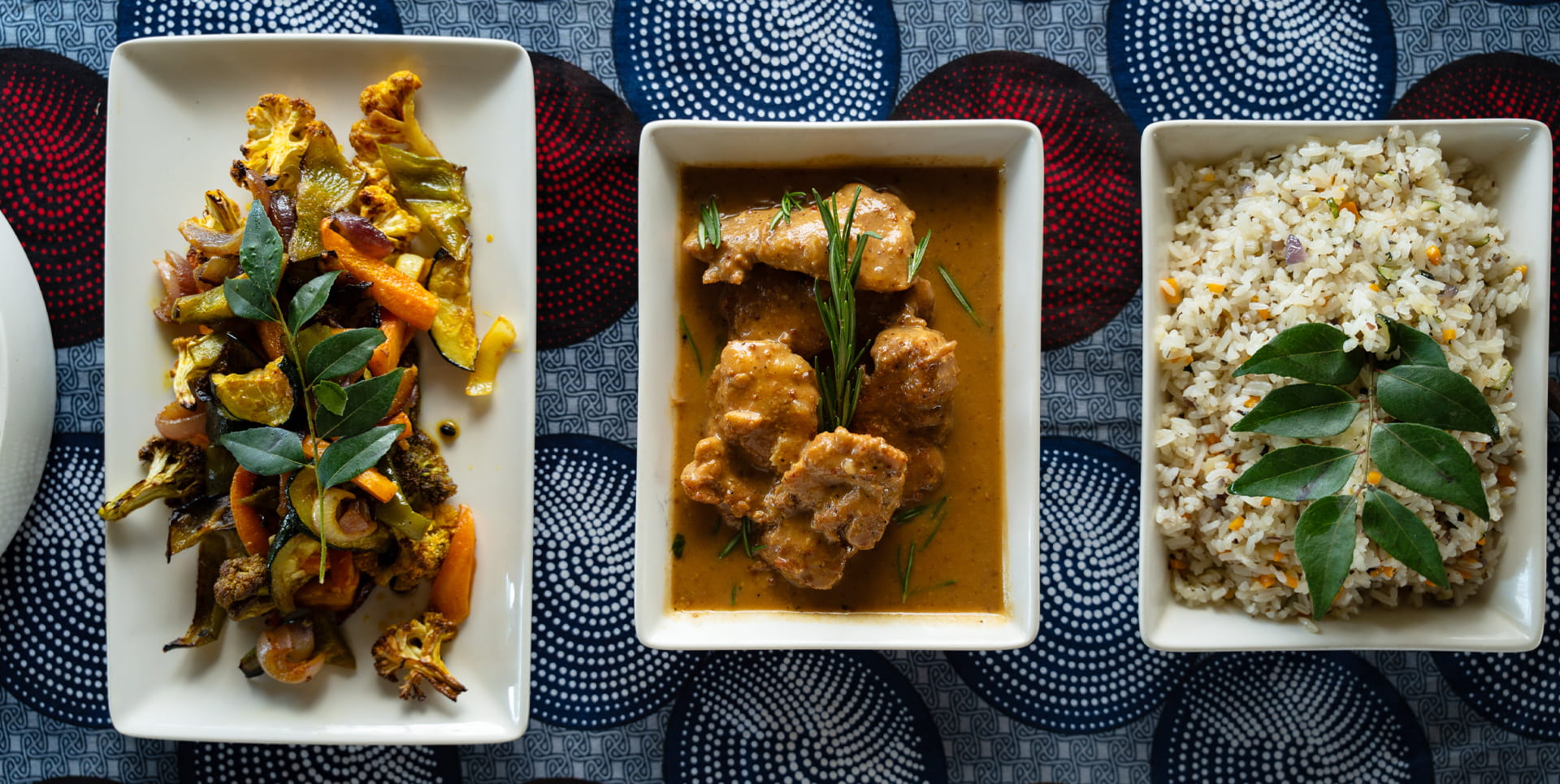
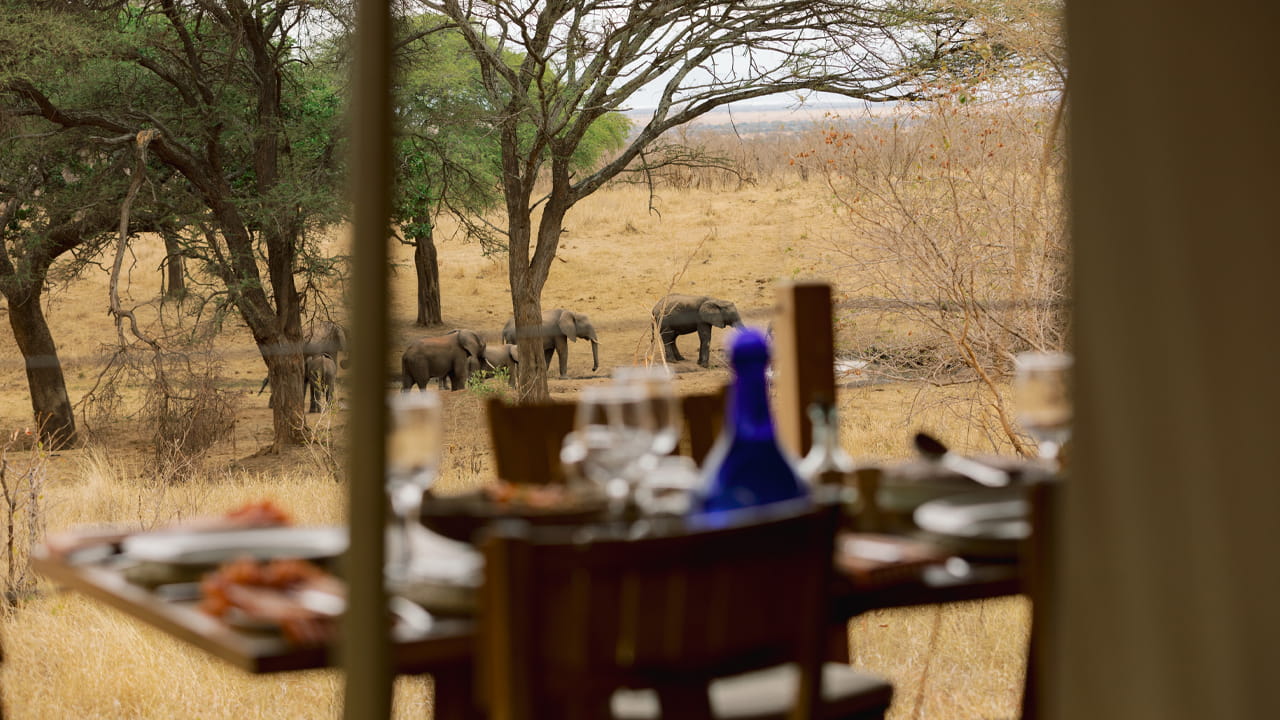
In lodges and tented camps, the menu may include international dishes alongside recipes inspired by East African cuisine. It is not uncommon to find soups, vegetables, rice, pasta, meat, fish and desserts, made with fresh ingredients that vary according to availability.
It is actually during dinner that it might be worth asking the establishment which local dishes are available.
In fact, the cuisine served on safaris is not necessarily exclusively traditional. Many establishments seek to strike a balance between familiar dishes for international travellers and the flavours of Tanzania, so as to make the menu accessible without sacrificing the opportunity to discover something new.
Tanzanian specialities to try
If you want to explore more than just the international cuisine served at the lodges, there are a few dishes that are well worth seeking out during your trip.
Ugali
Ugali is one of the most characteristic dishes of East African cuisine. It is a dish made from maize flour and water, with a firm consistency, and is generally served as a side dish.
It is eaten with meat, fish, pulses, vegetables or sauces and is a staple of everyday Tanzanian cuisine.
It has a delicate flavour: rather than being a dish to be enjoyed on its own, it is designed to complement other ingredients.
Nyama choma
The term ‘nyama choma’ refers to grilled meat, a dish that is very common in Tanzania and other parts of East Africa.
It can be made with various types of meat and is often associated with social occasions. For a traveller, trying it in a local restaurant or at an establishment serving traditional cuisine can be a simple way to experience a part of the country’s everyday culinary culture.
Pilau
Pilau is a fragrant, spiced rice dish that is particularly popular in East Africa.
Cardamom, cumin, cloves and other spices contribute to its distinctive flavour. It can be served with meat, chicken or vegetables.
It is also an interesting dish for those who wish to discover the link between the cuisine of the hinterland and the commercial and cultural influences that have reached the Indian Ocean coast.
Chapati
Chapati is a flatbread that is very common in Tanzania and East Africa.
It can be served with a variety of dishes, eaten for breakfast or used to scoop up sauces and other foods. Its presence also reflects the influences of Indian cuisine that have helped shape the region’s culinary traditions.
Mandazi
For a snack or a breakfast with a difference, why not try a mandazi, a small, slightly sweet fried pastry?
It is one of the best-known baked goods in East African cuisine and goes well with tea or coffee.
Tropical fruit
Fruit deserves a chapter of its own.
Pineapple, mango, papaya, banana and passion fruit are often found in breakfasts, desserts or as snacks. After several hours in the savannah, a portion of fresh fruit is also a pleasant way to take a light break.
Can you eat vegetarian food on safari?
Yes. The catering at lodges and tented camps can offer a range of vegetarian options, but it is important to let them know your dietary requirements before you set off.
Traditional Tanzanian cuisine also offers a variety of dishes based on rice, pulses, vegetables, potatoes, maize and fruit, which can be adapted to suit the needs of those following a vegetarian diet.
How are food intolerances and allergies handled?
If you have any allergies, intolerances or special dietary requirements, it is important to inform the tour operator and the accommodation providers in advance. This will enable them to organise meals that take your specific needs into account.
In more remote areas, the availability of certain ingredients may be more limited than in a city restaurant. Letting them know your requirements in advance therefore allows you to plan your meals more effectively whilst travelling.
Is the food different at lodges and tented camps?
Not necessarily. Lodges and tented camps can offer similar cuisine: it is mainly the category of accommodation and the type of service that make the difference.
In the simplest options, meals are generally served as a buffet, with a selection of dishes to choose from. In higher-end accommodation, however, table service is more common, with à la carte menus or individually served courses and greater attention to presentation.
The range of food on offer may also vary depending on the location and the nature of your stay, but in both cases you can expect a varied and carefully prepared menu.
Water and drinks: what to expect
During safari days, Tracks of Africa, a tour operator specialising in safaris in Tanzania, always ensures that water, snacks and soft drinks are available on board the vehicle, so that you have everything you need whilst you are in the park.
Water, coffee and tea are always included at lodges and tented camps. The availability of other soft drinks or alcoholic drinks, however, may vary depending on the type of lodge or tented camp and the accommodation package booked.
It is always advisable to check what is included in your itinerary before you set off, as meals and drinks may be included in different ways depending on the safari you choose.
Food is part of the Tanzania safari experience
Food on a safari is not simply a practical necessity between game drives. It is also one of the ways in which the trip allows you to experience Tanzania.
On the one hand, there are the unique rhythms of the day: breakfast before dawn, lunch whilst out exploring, and a break with a snack and perhaps a drink as the sun sets. On the other hand, there are ingredients and recipes that tell the story of the country, from dishes made with maize and rice to the spices that are particularly characteristic of the coastal areas.
For this reason, when organising a safari, it is worth looking beyond simply choosing the parks and wildlife sightings. The type of lodge, the accommodation provided and the opportunity to sample local dishes can all help to make the experience more fulfilling.
For those who wish to plan a trip tailored to their own interests and needs, it is possible to customise your own itinerary. And perhaps, between an encounter with an elephant and a sunset over the savannah, the most unexpected memory will be that of a dish you’ve tasted for the very first time.